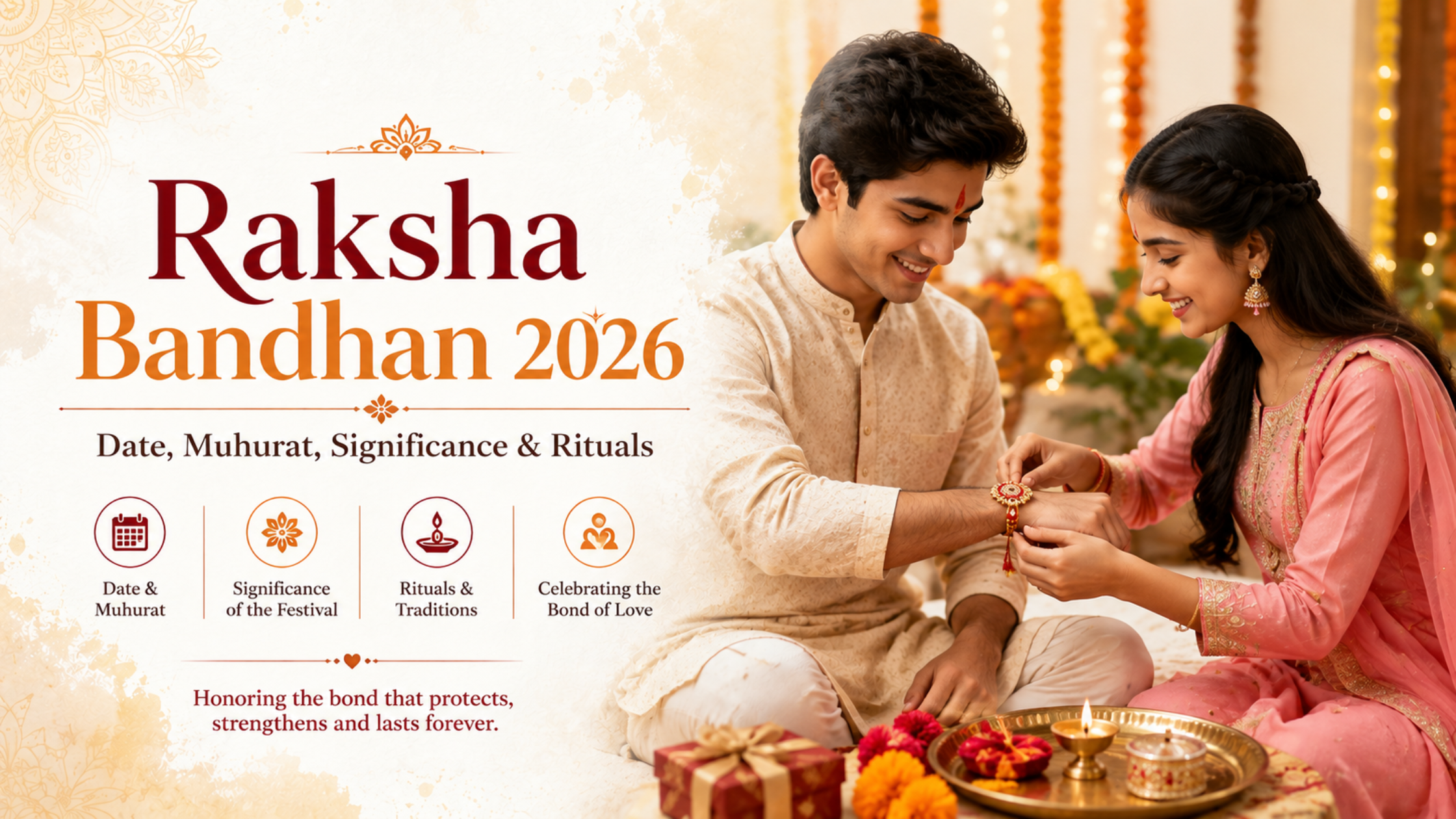
Raksha Bandhan 2026: Date, Shubh Muhurat, History & Rituals
The RakshaBandhan festival comes every year in the month of August during monsoon season, and this year Raksha Bandhan 2026 festival will be celebrated on August 28. As per Hindu belief on Raksha Bandhan day, siblings express love, care and affection between each other by strengthening their relationship with mutual respect. Many find this festival to be a beautiful reinforcement of family values and mutual respect. Raksha Bandhan symbolizes the duty and responsibility which brothers and sisters have between them.
The word RakshaBandhan originates from two Sanskrit words – Raksha and Bandhan, raksha means protection and bandhan means bond. By celebrating Rakshabandhan a brother assures protection to his sister and a sister in return offers love and care to her brother. During rakshabandhan day the sister ties a sacred thread called a rakhi around her brother’s right wrist by first applying tilak and doing aarti. In return, the brother offers her sister with gifts and take vows to protect and support throughout her life.
RakshaBandhan 2026 festival is celebrated on Shravan Pournima. This year celebration of RakshaBandhan date 2026 is on Friday, August 28. The most auspicious time or the Raksha Bandhan muhurat 2026 for performing Rakhi ceremony when a sister will tie rakhi on her brother will be in the morning from 05:57 AM to 09:48 AM. This year on August 28 2026, tying Rakhi before sunrise should be avoided as it is an inauspicious time or Bhadra Kaal. However, after sunrise, the entire morning is perfect for the RakshaBandhan ceremony. The Pournima tithi timing begins on the full moon (Shravan Pournima) of August 27 at 09:08 AM and ends on August 28 at 09:48 AM. If you miss the early morning slot on August 28 for the rakshabandhan ceremony then you can perform Raksha Bandhan on the same afternoon known as Aparahna muhurat which is also considered a highly favorable time. Rakhi 2026 or Raksha Bandhan 2026 is celebrated on full moon day of Shravana which is the 5th month of Hindu calendar. Each year the RakshaBandhan festival date is not the same as it differs because the Hindu calendar is Solar having lunar adjustments.
On the occasion of RakshaBandhan festival, sisters first decorate the Aarti plate with Aarti items such as diya, Kumkum, Akshata. The sister then makes the brother sit on the Aasan. She then applies tilak on her brother’s forehead and then performs his Aarti. The sister then ties the sacred thread or Rakhi around her brother’s right wrist and prays for her brother’s good health & long life. The thread, represents a sister’s love and sublime sentiment.
Raksha Bandhan translates as “bond of protection”. This major Hindu festival celebrates eternal love, bond and duty between siblings. On this day, a sister ties the sacred thread (rakhi) around her brother’s wrist and prays for his well-being, while the brother vows to protect and support her sister. The festival of Raksha Bandhan is rooted in Indian history and is being celebrated since ancient times. We find the description of Raksha Bandhan in Puranas and the epics like Mahabharat. In the Mahabharat, Draupadi tied a piece of cloth on the wounded finger of Lord Krishna by tearing a strip of her sari. Lord Krishna remembered this act of love and many years later in the game of dice, when the Pandavas lost everything to the Kauravas and Dushashan was trying to disrobe Draupadi in the Kuru assembly, at that time Lord Krishna appeared and provided Draupadi with ample amount of cloth by saving Draupadi from getting disrobed. Thus, Rakshabandhan festival is a part of Indian culture and is deeply rooted in its history since ancient times.
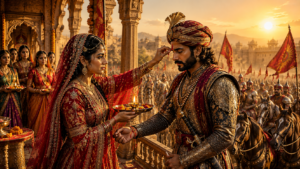
During Middle Ages when Northern India faced Islamic invasions, the sisters of Rajput kings and warriors anointed their brother’s forehead with Kumkum tilak by performing Aarti having diya. The brother assured protection and love to her sister and the sister prayed for her brother’s good health and welfare by tying Raksha or thread on their brother’s right-hand wrist. This custom is still followed by Hindus till date on Rakshabandhan. Presently, the cultural significance of RakshaBandhan extends well beyond blood relations. Rakhi is also tied between cousins, sisters-in-law, friends, neighbors, and even community protectors like military personnel, police etc.
Ultimately, the Raksha Bandhan significance is a beautiful reminder of harmonious, universal brotherhood and lifelong commitment to those we care about. Raksha Bandhan ritual is performed by sister who first prepares a puja thali consisting of kumkum roli (vermilion), chawal (rice), a diya, and sweets. During the the specific muhurat on Rakshabandhan day the sister offers her brother a place to sit on an asana. When the brother is seated in east or north direction, the sister applies a tilak on her brother’s forehead, she then ties the sacred rakhi on his right wrist while reciting prayers for his protection, and completes the ceremony by performing aarti and exchanging sweets.
Complete Step-by-Step Puja Vidhi and Rituals:
- Purify and Prepare: Wake up early in the morning by taking a purifying bath, clean the puja area and set up a sacred space for the ceremony.
- Arrange the Puja Thali: Decorate a plate with a diya (oil lamp), roli, unbroken rice grains (akshat), sweets, and fresh flowers.
- Offer First to Deities: It is an auspicious practice to first offer the rakhi to your chosen deity or Lord Ganesha before tying it to your brother.
- Positioning: Ensure the brother is seated facing East or North. Place a handkerchief or clean cloth on his head during the ritual.
- Tilak & Aarti: The sister applies the tilak (kumkum mixed with water) on the brother’s forehead and sprinkles rice grains (akshat) over his head as a blessing. Light the diya and wave it in a circular motion around the brother’s face to perform aarti.
- Exchange Sweets and Gifts: After tying the thread and completing the aarti, feed your brother his favorite sweets as a symbol of love and affection. In return, the brother offers his sister a gift or cash token along with a lifelong vow of protection RakshaBandhan.
Celebrations across India: Rakshabandhan celebrations vary in different regions of India since most of the celebrations are family-centric traditions and may be state-specific cultural celebrations.
Regional Variations and Traditions:
- North India: North Indians focus on family gatherings wherein sisters perform aarti and apply a tilak (vermilion) on their brother’s forehead before tying the rakhi and then offer traditional sweets.
- Western India: In Gujarat, the Rakshabandhan festival coincides with Pavitropana where people worship Lord Shiva. In Maharashtra and Goa, Rakshabandhan is also celebrated as Narali Poornima by coastal and fishing communities by offering coconuts to the sea to seek blessings for a safe fishing season and prepare sweet dishes like coconut sweet rice and puran poli.
- Eastern India: In West Bengal, rakshabandhan day is also known as Jhulan Purnima which is dedicated to Radha and Krishna. It is also marked by “Rakhi Utsava” at Santiniketan, promoting universal brotherhood. In Odisha, rakshabandhan is known as Gamha Purnima where cattle are worshipped alongside sibling rituals.
- Southern India: In South India rakshabandhan is known as Avani Avittam, wherein the Brahmin men primarily take sacred baths and change their holy threads (janau) for the entire year.
Beyond families, the Rakshabandhan festival transcends boundaries. Women across the country tie rakhis on the wrists of soldiers, police officers, and community workers to honor their service. One of the most emotional expressions of Raksha Bandhan is its celebration with the Border Security Force (BSF), where women tie rakhis on the wrists of India’s premier border guarding force who safeguard and protect India’s international border.
Bollywood films have made Rakshabandhan festival popular throughout the world by depicting it through Bollywood songs. Description of Rakshabandhan in Bollywood movies portrays the loving bond and relation between brother and sister.
FAQ
1. When is Rakshabandhan celebrated?
Ans: It is celebrated on the full moon day (Purnima) of the Hindu month of Shravan.
2. What are some popular gift ideas for sisters?
Ans: Brothers can gift their sisters with jewelry, clothing, personalised items, books and gift hampers.
3. To whom can women tie rakhi other than their brother?
Ans: Rakhis can be tied to cousins, sisters-in-law, friends, mentors, or even soldiers who protect our borders.
4. How do you choose right rakhi?
Ans: A sister should choose a rakhi for her brother which is comfortable, smooth and easy to wear.
Conclusion
Celebrating Raksha Bandhan festival may have changed its form over the years, but what has remained is its cultural spirit. Earlier, the festival was mostly celebrated within families through simple rituals, handmade rakhis and home-cooked sweets. Today, siblings may live in different cities or countries but they celebrate rakshabandhan through video calls, couriered rakhis and online gifts which keep them connected with each other. Children nowadays choose cartoon rakhis, adults may prefer silver or handmade rakhis, and families may now include cousins, friends and distant relatives in their celebration. However, the centre of Rakshabandhan festival remains the same which is exchange of love, protection, memory and affection between siblings.